Best Coffee Machine For Americano
By: Kev | Updated On: September 12, 2024 at 4:25 pm
So you’re pondering that age-old question which is the best coffee machine for Americano? Well OK, maybe it’s not quite up there with “which came first, the chicken or the egg”, but if you love Americano and you want to be able to make your own, which is the best coffee machine for Americano is a very good question, and the answer might not be quite what you thought.
Americano is one of the most popular espresso-based drinks in the UK. If you’re doing some people watching while sipping your coffee in any cafe’ in the UK, these days you’ll probably hear the term “flat white” repeated many times, along with other milkies such as latte and cappuccino of course, although flat whites probably outsell all other milkies several times over at the moment. When it comes to black coffee, though, Americano is a coffee shop favourite.
What is Americano Anyway?
Americano is espresso mixed with hot water, for a bigger less intense (than espresso) coffee, it’s as simple as that.
You’ll often hear that it needs to be a double shot or it needs to be made at a certain ratio of coffee to water, or that it has to be made with the espresso first and the water on top, and various other stipulations, and while certain coffee shops do things certain ways, that doesn’t make it a rule.
If you mix espresso with hot water, then in my humble opinion, regardless of the way you’re doing it you’re making what is generally labeled as “Americano”.
Want some handy tips for dialing in:
When, Where & How did Americano Originate?
In a blog post like this when discussing Americano, or coffee machines capable of producing Americano, you’ll often read that Americano has its history in the second world war when American GIs in Italy were wanting their espresso to be diluted with hot water to give them a coffee they were more used to drinking back home, and thus the Americano was born.
As I discussed in the video below, while this is a really nice and neat explanation, it doesn’t quite ring true to me.
Firstly, American soldiers weren’t visiting coffee shops and drinking espresso, mainly because coffee was banned in Italy during WW2.
Secondly, this would have us assume that Italian Baristas didn’t know much about Americans until the second world war. Given the fact that Italian bar tenders (thought to be at Gaspare Campari’s bar in Milan) named the Campari & sweet vermouth-based cocktail “Americo” in the 1860s due to its popularity with American tourists, it seems unlikely that it would have taken WW2 to inform Italians of how Americans like their coffee.
I was really surprised when I discovered the fact that coffee was banned in Italy during the war, by the way. I don’t know why this history is so rarely told. There are even stories of Italian kids during that time getting their first taste of coffee thanks to American soldiers who’d taken instant coffee with them in their rations!
For more on the coffee ban, and to see me reading some amusing (to me at least) pages from the soldier’s guide to Italy which was given to US & British soldiers in which I found the info about coffee being banned, see my video below.
Anyway, if you just came here to figure out which is the best coffee machine for Americano, then you’ve already got more than you bargained for :-), and I’m about to give you even more than you probably expected, as while most people would assume that you need an espresso machine for Americano, not necessarily…
Manual Brewers for Americano
I’ll get into the coffee machines for Americano in just a sec, but first of all, I just wanted to make sure you knew that you don’t necessarily have to buy a machine for Americano.
Technically speaking, Americano requires an espresso machine, because what Americano is, is espresso mixed with hot water. So, yes, if you want “true” espresso from home, you’ll need an espresso machine or a non-electric espresso maker. If you’re not a purist, though, and you simply want something that tastes somewhat similar to Americano, then here are a couple of inexpensive manual options.
In theory, you can use any manual brewer to make an Americano-style coffee, and for this reason, you’ll often hear that you can use filter coffee machines or pourover filter devices for Americano, but this depends on how intense you like your Americano.
The two main options I’m suggesting here for manual coffee brewers for Americano style coffee give you sufficient control over intensity to mean that this will work for all tastes, while filter is only going to work for people who enjoy a less intense Americano.
Some people enjoy something along the lines of 1:1 to 1:2 espresso and hot water, so for example a 40ml double shot topped up with around 40ml – 80ml of hot water, but some people will top up a 40ml espresso with around 250ml of hot water to make a standard 10/11 ounce mug of Americano for example. With the brewers I’m talking about here, you can make a more concentrated espresso style coffee that can be diluted to your personal taste.
If you want the best tasting Americano then you’ll need to use great coffee, which would seem to be a great point to shoehorn in a totally shameless plug for my own coffee! 🙂
Aeropress
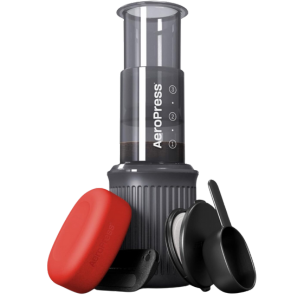
The Aeropress was invented as a way to make single cups of espresso-style coffee, and coffees that would traditionally be made with espresso, including Americano, Cappuccino, and Latte. While you may know of the Aeropress as a sophisticated and nerdy-looking process involving brewing with the Aeropress upside-down, or downside-up, a process imaginatively named “the inverted method” this isn’t the way the Aeropress was actually designed to be used.
I know this from my conversations with the inventor of Aeropress, Alan Adler, a very nice and humble bloke, who told me that he was just looking for a simple fast way to make an espresso-style coffee that could be diluted with water or with milk and that all of the other things that happened with Aeropress were “happy accidents”.
If you simply follow the instructions on the box or watch my video below which only goes off from these instructions ever so slightly, what you’ll end up with is a short and intense, concentrated coffee. It’s not true espresso, but it’s not a billion miles off, and when you top it up with hot water for an Americano style coffee, unless you have a very keen palate you’ll probably not be able to tell the difference between this and an Americano from a coffee shop.
Bialetti
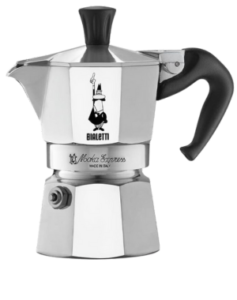
Most people when thinking about Italy and Coffee, think espresso, but actually, it’s much more common for people to make coffee at home in Italy, and most other parts of Mainland Europe with a Bialetti, rather than an espresso machine, and the coffee that a Bialetti makes is close to Americano.
I’m sure there are more Italian households these days with an espresso machine, especially since Covid, but in most Italian cities espresso is so available, and so cheap, that it probably doesn’t make quite as much sense to invest in an espresso machine in Italy as it does in the UK.
I say close to Americano because what Bialetti and other stovetop coffee pots produce is usually somewhere between lungo to Americano in ratio.
If you make it with a slightly higher ratio of water to coffee you’ll brew a very similar coffee where ratio and intensity is concerned to Americano, only technically speaking it’s a bigger lungo because all of the water in the cup has been involved in the brewing, whereas Americano is usually espresso topped up with hot water.
When all said and done, though, I think most people who like Americano will be fairly happy with the coffee that a Bialetti will produce, especially if you follow James Hoffman’s technique below.
Best Espresso Machine For Americano
If you want true Americano, which is espresso mixed with hot water, then you need a way to make true espresso, and that would be an espresso machine. The espresso machines I’m featuring here are those that are capable of delivering espresso and hot water, which means you can make Americano purely from the machine without other means of delivering hot water. I’m sharing what I think are among the best options, in order to prevent this post from turning into War and Peace, but if you want lots more options, see:
Sage Barista Express
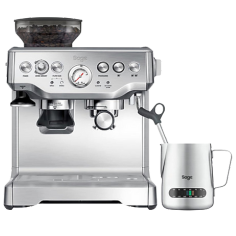
The Barista Express from Sage, or Breville, is an immensely popular espresso machine, not just here in the UK but all over the world, and it has a dedicated hot water spout so it’s definitely worthy of being included among the best espresso machines for Americano.
Just a quick note on the “Sage/Breville” thing, as I’m getting an increasing number of questions about Breville coffee machines in the UK. Coffee machines that sell in the UK under the Sage Appliances brand, sell in most other countries under the Breville brand. But, the Breville coffee machines you’ll find in the UK are not the same machines.
Breville Worldwide sold the rights to the Breville brand in Europe in the 80s, which means that Breville Worldwide can’t use the brand name here, it’s owned by an American company called Newell Brands. Newell Brands also own an Australian brand called Sunbeam, who released a range of machines in Australia. They released this range here in the UK with the Breville branding. So if you see a Breville machine selling in the UK which looks similar and has a similar name to one of the Sage machines, you would be forgiven to make the common mistake of thinking they’re the same machines.
This isn't a bean to cup coffee machine
I’ll talk about bean to cup coffee machines shortly, but I just want to make sure everyone understands that this isn’t a bean to cup coffee machine. The definition of bean to cup machine, as far as I’m concerned, is that it has a built in grinder and a brewing unit, so the user involvement is simply selecting the drink via a button or a touchscreen.
Sage (Breville Worldwide) doesn’t make bean to cup coffee machines, they make traditional espresso machines, some of which have integrated grinders, and some of which also have automation or assistance where espresso making is concerned.
Some of the Sage coffee machines with assistance or automation very cleverly deliver similar cup quality to a traditional espresso machine in experienced hands but with a similar level of convenience to bean to cup coffee machines, but the Barista Express isn’t one of these machines.
This is very much a traditional espresso machine in that it’s down to the user to have the barista skills required to deliver decent espresso, although it does come with dual walled, pressurized baskets which do reduce the skill requirement – although if you have a well-trained espresso palate you’ll probably conclude that this also reduces the cup quality.
See my post on Sage offers and discounts:
For an in-depth warts n all review of the Sage Barista Express see:
Sage Barista Express Impress
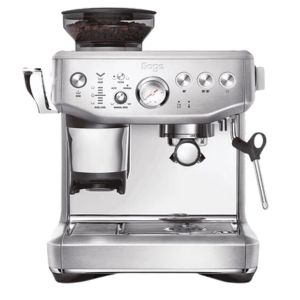
I mentioned earlier that while Sage don’t sell bean to cup machines, some of their machines have assistance or automation, and that the Barista Express doesn’t have this. The Barista Express has been an incredibly popular espresso machine, but it hasn’t pleased everyone – mainly in my opinion because many people have expected it to assist in the espresso making process.
Many retailers slap this in the bean to cup category because they make the mistake of thinking that a built in grinder means bean to cup, which I think is the main reason for this confusion.
The Barista Express Impress, though, does have that assistance. It assists the user with the tamping and the dosing, so the user only has to go through the motions without requiring a great deal of home barista skill and experience.
It’s built on the Barista Express, it’s more or less the exact same espresso machine, but it has the assisted dose and tamp. I’m a huge fan of this machine, I think it does what a lot of people have always expected the Barista Express to do, and I think in time this will probably become just as popular as the Barista Express, maybe even more so.
Gaggia Classic Pro
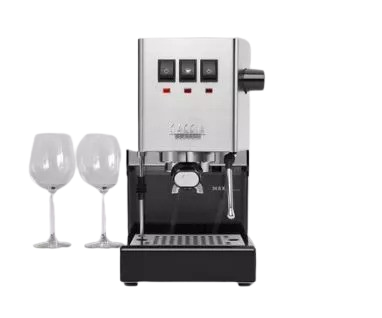
PLEASE NOTE: You may find one or two retailers at present offering great deals on Gaggia machines, especially the Gaggia Classic. If you see the Gaggia Classic Pro selling for around £315 – £330, this may not quite be all that it seems. There are companies with websites that appear to be UK based, but they’re actually selling grey imports from outside of the UK, which usually take over a week to deliver, and are sold with no UK warranty!
When you buy from Gaggia Direct (the UK distributor for Gaggia Milano) you’re buying genuine UK Gaggia models with a UK warranty, and UK stock, and at present, you get a three year UK warranty.
The Gaggia Classic is one of the most popular traditional espresso machines of all time, and it’s also been around the longest, where semi-automatic pump espresso machines are concerned, that is, having been released in 1991. Although the Classic doesn’t have a separate, dedicated hot water spout, it will dispense hot water via the steam wand at your request.
The Gaggia Classic Pro is the latest version of the Classic, which goes back to its roots after numerous releases each seemingly further away from the beloved original Classic which concluded with the 2015 model which didn’t go down very well at all among Gaggia Classic enthusiasts due to the loss of the 3 way solenoid valve, and a move away from the traditional and robust rocker switches.
In a nutshell, the Gaggia Classic doesn’t have the same kind of user-friendliness and modern kitchen friendliness of Sage machines, but they’re made the way machines used to be made, and the upside of this is that not only is the classic capable of great cup quality, it really is built to last. They are made to be maintained and repaired, just as the original classic was, and my original classic is now almost 20 years old and still has plenty of life left in it.
For more on the Gaggia Classic Pro, see:
Sage Bambino
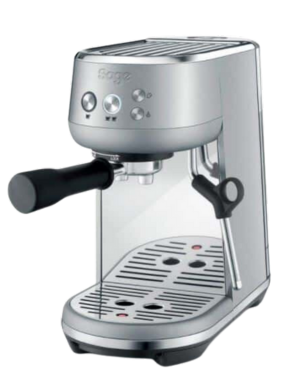
The most common comparison with the Gaggia Classic Plus that I’ve just discussed is the Sage Bambino Plus, however, I’m recommending the Bambino here vs the Bambino Plus due to the inclusion of a hot water button on the Bambino which is missing from the Bambino plus.
There is a solution to this on earlier models of the Bambino Plus, in which pressing and holding the one cup shot button and froth settings button for about half a second starts the hot water flowing from the steam wand, and pressing the one cup shot button again stops the flow. It appears that this doesn’t work on some versions, though, depending on the firmware, and I’ve heard from a few people that it isn’t working on the current latest models of the Bambino Plus.
The Bambino is the base level of the hugely successful Bambino Plus. It’s cheaper than the Plus, and as well as having a hot water button, it differs from the Plus only in a few areas:
- Slightly smaller water tank, 1.5L Vs 1.9L
- No auto milk steaming
- Steam wand on a ball joint vs only up and down movement on the Pro
- Single hole steam tip vs four hole tip on the Bambino plus (slightly slower steaming)
- Brew valve vs solenoid valve
The pros and cons of each of the above are fairly obvious except for the last one, the brew valve vs the solenoid valve. This is the method of dumping the pressure and excess moisture from the group after each shot. Solenoid valves are the preferred choice, as they do the job quickly and effectively.
I think this ends up being more of a pro than a con for the Bambino, though, simply because the brew valve does a good enough job but the lack of water being ejected into the drip tray each time means that the very small drip tray makes a bit more sense than it does for the Bambino plus. One thing that Bambino Plus users have to get used to is very regularly emptying the drip tray, as it doesn’t take long at all to fill, but you won’t have to empty the drip tray nearly as often with the Bambino.
Overall I think the Bambino is a great little espresso machine for the money. It’s a stand-alone espresso machine so you’ll need a grinder, although you can opt for the dual walled baskets it also comes with if you’d prefer to use pre-ground.
A great coffee machine without great coffee is like pushing water uphill with a rake, it will just never work. My coffee (and this is the coffee I drink, so trust me on this) is flipping lovely, give it a try and let me know what you think 🙂 (kev@coffeeblog.co.uk).
DeLonghi Dedica
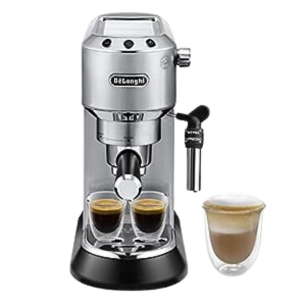
If you like the idea of something like the Bambino, but you’re put off by the price, there are a number of cheaper espresso machines on the market. Many of them have been made to sell below the emotive £100 mark, but due to the recent manufacturing and import cost increases many of these inexpensive espresso machines are hovering at ten or twenty quid above that.
Espresso machines are quite expensive products to produce, due to the components required. A retail price of £99 or even £120 is really quite a tall order when you consider that one small part on a commercial espresso machine or a higher end home espresso machine can cost considerably more than this, so you do need to manage your expectations when spending such a small amount of money on an espresso machine.
The Delonghi Dedica however fits into a price bracket in between these cheaper machines and the Sage Bambino, and in my opinion, where it sits in price is about equal to where it sits in the pecking order. The Dedica in my humble opinion isn’t on par with any of the Sage espresso machines, or the Gaggia Classic Pro, but it’s a better built and better performing espresso machine overall than any of the machines I’ve experienced at around the £100 mark.
It’s still a very inexpensive espresso machine, but it has quite a bit going for it for the price including the relatively easy modification to using it as a non-pressured basket home barista espresso machine & three brew temperature settings, and the latest iterations of the Dedica from the EC685 versions and onwards have the really clever adjustable Panarello steam wand.
For more on the DeLonghi Dedica, see:
Best Bean To Cup Coffee Machine For Americano
De'Longhi Magnifica S Smart ECAM250
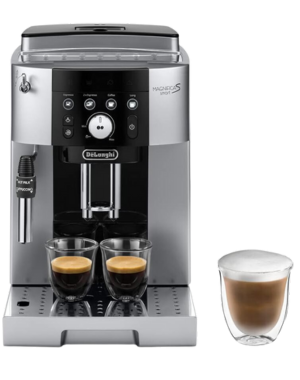
These are a more recent iteration of the popular DeLonghi Magnifica, and they’ve clearly been made to look a bit more modern. They’re really not much different where the cup quality is concerned, they’re slightly quieter, a bit narrower, and on the S Smart version, you also get the smart Panarello wand with the two settings. This means if you want to, instead of creating bigger bubbled old-school cappuccino foam, you can use the Panarello to create microfoam for silky flat whites.
There are quite a few versions of the Magnifica and Magnifica S, mainly they just differ aesthetically except for the S Smart which features the smart Panarello. They’ve also brought out a new “Magnifica Evo” touch screen version which looks very posh, but just keep in mind that all of these machines are going to have the same or very similar grinders and brewing units, so the coffee they make is likely to be almost the same.
Gaggia Brera
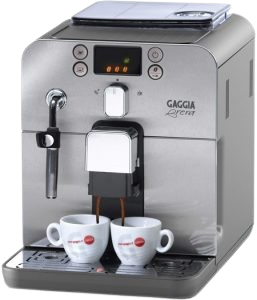
Overall I think the Gaggia Brera is probably my favourite of the lower cost bean to cup coffee machines. It’s a bit more money than most of the Delonghi Magnifica machines, but it’s still a very low price and it’s a great machine for the cash.
What I particularly like about Gaggia bean to cup coffee machines vs Delonghi is two main things.
The three bean settings. With the DeLonghi Magnifica machines, you don’t have any way to specify a specific dose, the dials have no settings which equate to the weight of coffee in grams. With the Brera (and all bean to cup coffee machines) there are bean settings that equate to the weight of coffee that will be ground on each setting. 1 bean: 7g, 2 beans: 9g, 3 beans: 11g.
True double shots. The DeLonghi Magnifica machines do produce a double shot, but they don’t grind double the coffee, so to me, this isn’t a true double shot. When you press the shot button on any Gaggia bean to cup coffee machine twice, it’ll grind and pull twice, so you get double the volume from double the ground coffee.
These two things combined give you a bit more control over your shots if you were looking to get somewhere near home barista espresso from a bean to cup machine. You’re never going to get true home barista espresso from a domestic bean to cup coffee machine, mainly due to the quality of the grinder and the lack of fine-tuning ability, and also the reliance on the brewing unit to pull the shot. With Gaggia machines, though, you do have more control over the dose, and you have the ability to simply press the shot button twice to get a true double shot.
The water tank is front accessed too which is quite rare for Gaggia machines as they tend to favour top filled tanks. If you’re putting your machine in an area where there’s nothing above it, then this won’t matter, but if you need to tuck your machine under wall units then the front accessed tank means you don’t need to pull the machine off the counter to fill the tank.
For loads more options, see:
Kev's Best Coffee Machine For Americano What the FAQ
Is black coffee and Americano the same?
Yes, no, and maybe. Black coffee really is just any coffee that hasn’t had milk added, it doesn’t refer to the brew method or the process. Americano is the widely accepted label for espresso mixed with hot water, so if you’re talking about black coffee, you’re talking about any kind of coffee which hasn’t had milk added, but if you’re talking about Americano you’re talking about espresso mixed with hot water.
How many shots are in an Americano?
Depends, on your tastes and the size of the cup. You’ll most commonly find double shots used for just about all coffees these days, using single baskets and pulling single shots is increasingly rare both with home espresso machines and in coffee shops. But it’s just down to personal preference and the size of cup you’re using.
Is a Lungo the same as an Americano?
Nope. Lungo is an espresso ratio, while Americano is an espresso based coffee which is simply made by mixing espresso with hot water. There are three commonly used names for espresso ratios, meaning the ratio of water vs ground coffee beans used. Ristretto, Normale, and Lungo, or restricted, normal, and long. Ristretto is usually regarded as being around 1:1 for example an 18 ml shot made with 18g of coffee. Normale is usually regarded as being 1:2, so for example, a 36ml shot from 18g of coffee, and a 1:3 is usually called a Lungo. So the difference between a Lungo and an Americano is that all of the water in the cup has passed through the coffee with a Lungo, while with an Americano you’ve simply taken an espresso and added hot water to it.
What is the ratio of espresso to water in an Americano?
This is a bit of a trick question because Americano is not a shot of espresso, it is espresso mixed with hot water, so the ratio would refer to the espresso which you’re then mixing with hot water. If you’re asking what is the ratio of espresso to hot water in an Americano meaning how much hot water do you add to the espresso to make Americano, this is purely down to taste, the answer is simply to add some hot water, taste, add more if required. This is if you’re making your own, of course, if you’re a barista you’ll be following a specific recipe.
Life is like a box of chocolates, subscribe to my YouTube Channel, try my coffee at The Coffeeworks (use discount code CWNC25 for 25% off your first order), follow me on Twitter & Instagram, follow the coffeeblog FaceBook page, and that’s all I have to say about that.
Coffee Blog is proudly powered by WordPress