Coffee Blog » Best Coffee Beans. Kev’s 2024 UK Reviews.
Best Coffee Beans. Kev’s 2024 UK Reviews.
By: Kev | Updated On: September 20, 2024 at 3:59 pm
Whether you’re a time served home barista or someone just starting to thing about upping their coffee game, the fact that you’re here reading an article about the best coffee beans shows that you’re smart, you understand that getting the best coffee out, means putting the best coffee in.
But what does the “best” coffee beans really man, specifically for you?
Best Tasting Coffee Beans
This is probably what most people mean by best, but this is very similar to talking about the best wine, the best chocolate, the best beer or anything else, it really depends on your taste buds.
I can’t quite tell you which are going to be the best tasting coffee beans for you, because we won’t have the same taste buds, but I can point you in the right direction.
The first thing to keep in mind when it comes to taste, is that your palate can, and will, change. So when you’re trying to figure out what coffee beans might taste the best for you, we’ve got to start out by asking the question, what is your palate used to, and go from there.
Roast Profiles

The easiest way to point you in the right direction, is by roast profile.
Green coffee beans have no taste, roasting develops the flavour. As they’re roasted, a process referred to as the Maillard reaction occurs (named after one of the Chemists who first observed this process), a non-enzymic browning reaction, basically the chemical reaction of sugars and amino acids during the roasting process. This is the same reaction that happens when we cook food.
How far the roaster takes the roast is known as development. A more developed roast means allowing the roasting process, and therefore the Maillard reaction, to go on for longer to further develop the flavour of the coffee bean.
If you’re just finding your way into the world of freshly roasted coffee beans after mainly drinking main stream coffee, you’ll probably find the best tasting coffee beans, for your palate as it is now, from darker roast profiles.
As time goes on, however, you may find that this starts to change, because you’ll start to get a taste for the coffee beans themselves, and you’ll actually find that different freshly roasted beans have a distinct flavour.
This doesn’t mean that everyone will end up enjoying interesting, funky & tangy light roast, natural processed coffees, for example, but you will probably find yourself being more interested in the actual taste of each coffee vs “strength” which leads us to:
What Does Strength Mean?
A common complaint I hear from people who’re moving from mainstream coffee beans to freshly roasted, is that the coffee just doesn’t taste “strong” enough.
“It’s not strong enough for my tastes” or “I like a good strong cup of coffee, strength 4 or 5, and this is just not bold enough for me” and similar statements, are very common to hear from folk who’re moving away from mainstream coffee for the first time.
What’s happening here is that people aren’t fully understanding that they’ve entered a completely different world, where things have different meanings.
In the world of mainstream coffee, strength or intensity is often used to describe the development of the roast. If your palate has been developed by drinking mainly dark roast beans, you’ll be used to the particular taste notes that come from a more developed roast.
When you move over from mainstream beans to freshly roasted, what you’ll find is that most beans aren’t taken to the same kind of development, and for very good reason – and this can take some time to get used to, but you’ll more than likely find it’s well worth while!
Why Roast So Dark?
The terms light, medium and dark roast, have a completely different meaning in the world of speciality coffee. If you look at the beans from most small batch roasters, you’ll see that their “Dark” is usually nowhere near as dark as a bag of beans from the supermarket sold as medium roast.
Mainstream coffee is generally roasted much darker than most coffee beans roasted by small batch roasters. Don’t get me wrong, there are some beans that are roasted much darker by small batch roasters, but for slightly different reasons.
The reason mainstream beans are roasted so dark, is in most cases partly about ensuring batch consistency, and in some cases is because such a developed roast is necessary for the beans to be palatable when brewed.
It’s hard not to tar all main stream coffee beans with the same brush. There definitely is a difference on supermarket shelves when it comes to the quality the coffee bean was at the time of roasting. Some of the bigger, more premium brand names are actually higher quality coffee beans, vs a lot of mainstream coffee which is commodity coffee.
Commodity coffee is coffee that is produced and traded as a commodity, just like salt or rice. This kind of coffee is just coffee, OK it’s sorted into Arabica and Robusta, and generally into Origin, but it’s priced by the commodities market, it literally can’t be produced with quality in mind, because doing that is far too expensive when you’re selling it on the commodities market, where quality has no impact on price.
When it comes to this kind of coffee, a lot of which ends up as instant, but also in pods, sachets, and as pre-ground or wholebean coffee beans, the reason for a dark roast would mainly be because that’s the only way this kind of coffee is really drinkable, and partly to ensure batch consistency.
Some of the bigger brands that do use higher quality coffee beans, still roast their beans similarly dark, and in these cases it has more to do with batch consistency, the volume they have to roast their coffee to make it commercially viable, and partly down to what the mainstream coffee drinker is looking for.
So if you’re ever getting the opinion from any of my content about coffee beans that I’m saying all big brand or mainstream coffee beans is low quality, that’s not what I’m saying.
What I’m saying is that some of it is commodity coffee that probably needs to be taken to a darker profile, and some of it is higher quality coffee that the brand chooses to take to a darker profile, for whatever their reason is, partly just because that’s what their customers enjoy.
Who Wants a Piece of Toast?
There’s a reason that small batch coffee roasters tend to roast lighter than supermarkets, and it has nothing to do with toast ;-), but this is an analogy I recently used when replying to a question I was emailed with, and I think it’s the best analogy I’ve used so far to explain this.
If you buy the cheapest supermarket own brand white bread on the day of the sell by date, because like me you’re of the opinion that it’s “best before, not deadly after”, you’ll probably be of the opinion that it really doesn’t matter that much as you’ll be toasting the crap out of it anyway.
This makes sense, and I think most people doing this, especially if you’re like me and you’d only stop using it when you find green stuff growing on it ;-), would be toasting it quite dark and then smothering it in butter.
What you’re doing here is masking the taste of the bread with the Maillard reaction. You’re not tasting the bread at all, you’re developing the roast to the point where you’re just tasting the Maillard reaction.
You’re not using the toasting process to bring out the best in the flavour of the bread, you’re using it to mask the taste of the bread which would be tasteless or maybe a bit weird tasting if you ate it untoasted.
Let’s say you’re someone who might do the above when the month is outlasting the money (believe me, been there, for most of my life!) but maybe closer to pay day, you might pop into your local bakery towards the end of the week to pick up your favourite freshly baked loaf to enjoy over the weekend.
Would you do the same with this bread, toast it to within microseconds from being charcoal?
You wouldn’t do this, of course. You might not toast it at all, and if you did you’d probably toast it lighter because you want to enjoy the lovely flavour of the bread, toasting it to a certain degree will enhance it, taking it too far will just spoil it.
This is why small batch roasters tend to roast lighter. They’re only taking the roasts to the level of development that they find is needed to bring out the best flavours in that particular bean or blend, and how dark they take the roast will depend on the bean.
There are some beans that are at their very best when roasted darker, so when you buy darker freshly roasted beans they’ll have been roasted like that to enhance the flavour, not to mask it.
Start Where You Are
The most common reason people end up really not enjoying the coffee beans they’ve bought, is that they’ve made too big a jump from where their palate is currently. So the best advice I can give when it comes to finding the best coffee beans for you, is to understand your palate, and start where you are.
If you currently buy your beans from the supermarket, and you like a “strong” coffee – you’re not alone, in fact this is one of the most common things I hear from people who’re just starting to dabble with freshly roasted coffee.
Generally speaking if this is you, when you start trying freshly roasted coffee beans, I’d recommend sticking to the darker side of things, you’re probably best avoiding “medium roast” at this point, and also keep a look out for the kind of flavour notes that sound good to you.
If you’re really into “strong” mainstream coffee, you’ll probably like the sound of chocolate & nuts, caramel, and maybe even stronger flavours including spices, molasses, even tobacco and leather. So just be on the look out for darker roast beans with taste notes that sound like the kind of coffee you like to drink.
If you’ve been drinking freshly roasted coffee for a while now, maybe you frequently buy from roasters like Rave, Pact Coffee, Assembly coffee, Grind, Origin, Union Roasted, Caravan – you’re likely to have made the transition away from the taste of the more developed roasts, towards the medium side of things.
In fact I had an email along these lines today from a cworks customer.
He’d been mainly drinking Pact Coffee’s house blend for some time, but just fancied a change so he tried our Chocolate Brownie Blend, and kindly emailed me directly instead of leaving a review, to say he found it too over powering, too bitter.
I responded pointing him in the direction of our Millionaire’s shortbread, Cherry & Caramel Brazil and Fruit & Nut blend, which I think would be far more suited to his palate.
Chocolate Brownie blend, and the slightly bolder Chocolate Fondant blend, are the best sellers at cworks (closely followed by our Chocolate & Caramel Decaf Peru). I think the main reason for this is that a lot of our customers are just making the transition from main stream coffee to freshly roasted, and these beans tend to be exactly what the doctor ordered.
This is partly because they deliver the kind of flavour profile a lot of mainstream coffee drinkers are looking for, and partly because they’re very forgiving when it comes to dialling in.
The most common problem with people making the switch from supermarket to freshly roasted, is under extraction. It’s harder to under extract these beans, and to over extract them you’d have to try quite hard, and they probably won’t taste terrible over extracted either, to someone who is used to drinking darker roasted main stream coffee.
Best Coffee Beans – Suggestions
My main goal with this post was to point people in the direction of their own taste buds, and I do hope I’ve done that. If you have any questions or observations by the way, please feel free to leave them in the comments.
So when it comes to suggestions, they’re just that. I’m not saying that the coffees I’m suggesting are the best coffee beans, as we’ve ascertained there’s really no such thing as “best”, where coffee beans are concerned, as taste is so subjective, but I’m going to make some suggestions based on your palate.
Best Coffee Beans – Strong & Powerful
If you’re someone who enjoys “a good strong cup of coffee”, which is a phrase I read quite often in emails from readers who’re struggling to get the results they’re looking for, these are some suggestions for coffees that you might enjoy. If you’ve been mainly buying your beans from the supermarket or big online retailers, and you like your coffee “strong”, have a gander at these.
Clumsy Goat – South American House Blend
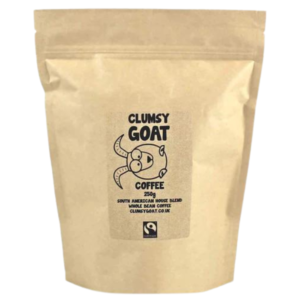
Clumsy Goat are a small batch coffee roastery in Whitworth, Lancashire. They roast weekly, and they only roast Fairtrade certified coffees.
This is one of Clumsy Goat’s more developed roasts, although remember what I mentioned earlier, this might not look like the dark roast you’re used to if you currently buy dark roast mainstream coffee beans.
This is a blend of Arabica coffees from Brazil (COOCAFE ) and Honduras (COAGRICSAL), a mix of natural and washed coffees, and it’s a bold but smooth coffee with notes of nuts, toast and liquorice. Well worth giving it a try, and just toggle between 250g and 1Kg, by the way, and you’ll see Clumsy Goat coffee tends to be much better value when ordered by the Kilo.
This is usually the case as the same amount of time, effort and almost the same packaging costs goes into bagging up a Kilo or 250g, but Clumsy Goat tend to give closer to their wholesale pricing when selling by the Kilo, so there’s a bigger difference than usual in going for a Kilo.
Origin Coffee – Stronghold
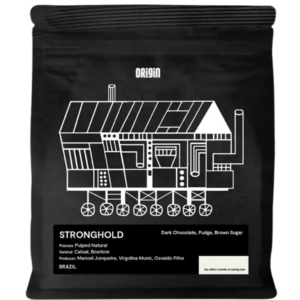
Origin Coffee in Cornwall are a small batch roaster that produces some very nice coffees, as I know from personal experience.
I’ve had Origin coffee quite a few times, I’ve had it in various multi roaster coffee subscriptions, I’ve had it when they kindly sent me some to thank me for helping them to solve a mystery, and I’ve had it at their roastery Cafe in Porthleven, Cornwall. By the way, if you’re ever in that neck of the woods I’d highly recommend a visit to Origin, and also to Canteen at the Eco park, in Porthtowan – both serve mega coffee and really nice food too.
I know you’ll be intrigued about the aforementioned mystery, and it’s a long story so I’ll abbreviate it as much as I can. Last Christmas, I received a Sage Barista Express Impress, with a note from Origin coffee congratulating me for winning the coffee machine in their Instagram competition. Amazingly lucky, given I didn’t enter it! ;-).
I managed to figure out what had happened in the end, and I spoke to Sage, who spoke to the relevant person at Origin, who was very happy to find the missing machine that the winner had been waiting for, they arranged to collect it and very kindly sent me various bags of coffee as a thank you.
Anyway, lovely bunch of people, lovely coffee, and you’ll probably have tasted it if you’ve been to Cornwall, as they’re one of the most popular wholesale roasters in Cornwall, supplying a number of Cornish coffee shops.
Stronghold is one of Origins darker roasts, it’s a blend of Brazilian coffees (Minas Gerais & Cabo Verde Mountain), and it has dark and rich flavour notes, with notes of Dark Chocolate, Fudge & Brown Sugar.
Cworks – Chocolate Fondant Blend
I know quite a lot about this particular coffee, as it’s mine :-).
Lots of readers were emailing me asking me to help them to find the kind of coffee they were looking for, and I’d always point them in the direction of other roasters, but one day I decided to trial a little project involving sending a number of polls to readers to find out as much as I could about the kind of coffee beans they were looking for, so I could create my own range for my readers – and The Coffeeworks was born.
This was a few years ago now, and since then it’s completely changed, developing to the point it is now where we have nineteen different coffee beans, plus collection boxes, bundles, and very flexible coffee subscription.
Our best seller for quite some time, has been Chocolate Brownie Blend, and this is a stonking coffee with delicious coffee notes, amazing as the base for a bold flat white. But we do get some customers who it’s just not quite bold enough for.
This is often people who’re using bean to cup coffee machines and not traditional portafilter espresso machines, as bean to cup machines do tend to tone down the intensity vs the same coffee via a portafilter espresso machine.
So for these people, we developed our Chocolate Fondant blend, which is a blend of the same beans but blended in a different way to create more intensity, and to give the chocolatey notes a bit of a toasty edge. For me, this coffee just tastes like the oosing toasty chocolate from a chocolate fondant, hence the name.
Grind – Dark Blend
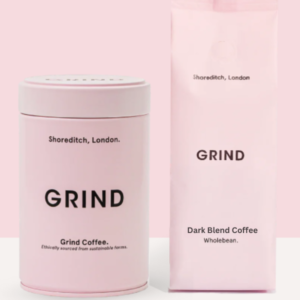
Grind are a London based roastery based in Shoreditch, and with a growing number of coffee shops throughout London. They only roast certified organic coffee beans, and they offer their coffee via compostable pods as well as whole beans and pre-ground.
They’re very simple when it comes to their coffees, they have an “editions” line of single origins, and for their blends they simply have house, light, dark and house decaf.
If you’re looking for a bold yet smooth and tasty coffee, grind dark blend is definitely worth a try, especially if you happen to live close to any of their locations, as you can pop in and try their coffee, and either buy it online or directly from the coffee shop.
Coffee World – India Monsoon Malabar
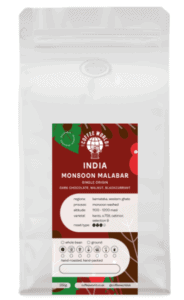
If you’re looking for really strong coffee, I’d recommend trying a Monsooned Malabar. This kind of coffee is usually really intense and rich, but it’s not necessarily overly bitter, so if you’re someone who wants intensity, but is looking for strong but tasty, you may love this kind of coffee.
It’s important to note that there isn’t just one Monsoon Malabar, in fact there are loads! Monsoon or “Monsooned” Malabar is the name of the process this kind of coffee is put through, it’s particular to India, and it involves the beans being left in open warehouses during monsoon season.
I’ve has this specific Monsooned Malabar from Shop Coffee, I picked up a few coffees from them when I was down in Cambridge picking up the Rancilio Silvia and Eureka Mignon that they were kindly loaning me to review.
I tasted a lot of dark chocolate notes in this coffee, along with lots of other interesting flavours, intense but not at all unpleasant.
Best Coffee Beans – Complex & Interesting
If you’ve been drinking freshly roasted coffee beans for a while and you’re finding yourself wanting to explore the flavours that coffee has to offer, here are a few options of varying levels of adventurousness.
If you’re just looking for something a little bit more interesting, stick towards the first few, as the last ones may be a bit challenging for some, especially for espresso – but if you’re up for a challenge, check them out :-).
Pact Coffee – Terras Atlas
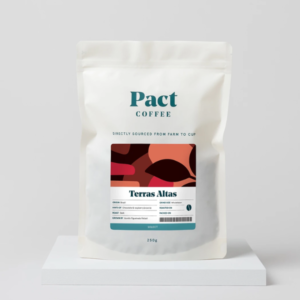
Pact coffee is one of the most popular coffee subscription firms in the UK, in fact they’re one of the biggest independent coffee roasters in Europe now, and they have some brilliant coffees, as I should know as I had their subscription for 6 years.
Terras Atlas is one of their “select” plan, and this doesn’t mean you have to order it via subscription, you can simply buy it from their website, but if you take out their subscription and choose the select plan, this is one of the coffees you’ll get as part of this discovery subscription.
It’s a Brazilian coffee, and we’re still towards the dark roast side of things here remembering that speciality dark roast is different to supermarket dark roast, but we’re going a little bit more interesting where the flavour notes are concerned, with this coffee being described as tasting like Chocolate and raspberry brownie.
It’s important to keep in mind that these are coffee flavour notes, not flavourings.
Given that some mainstream coffees (mainly pods) can contain flavourings, it’s no wonder that some people when they read things like “chocolate and raspberry brownie” would assume it’s flavoured, but this is just the description of the flavour notes.
It’s also important to note that these are usually quite subtle.
They might not be for the person who tasted them and wrote the descriptors, for example the head of coffee for Pact is an incredibly experienced coffee cupper, he’s been a cup of excellence judge (a prestigious speciality coffee competition), and was one of the Mercanta coffee hunters, so this is someone with a very trained palate.
So when you first try a coffee, don’t be too frustrated if you don’t pick out any of the flavour notes from the card/bag at all at first. Firstly be aware that you really need to be well dialled in to be able to taste the coffee at its best, without tasting the results of under or over extraction, and secondly, you do need to give your palate time to develop, and to allow for the fact that taste is very subjective.
Cworks – Cherry & Caramel Brazil
When it comes to my coffee, for anyone just moving their way from the more traditional dark roast espresso blend territory, Cherry & Caramel Brazil is one of the coffees I’d recommend, along with Fruit & Nut blend.
Fruit & Nut blend is one of the coffees in our Beginner home barista collection box, and I recommend that customers try that one last, once they’ve worked their way through chocolate brownie, chocolate fondant and fruitcake blend.
The first two are very forgiving when it comes to dialling in, and will give many home baristas the kind of flavour profiles they’re used to but with more flavour and balance, hopefully. Fruitcake blend will just require a bit of adjustment to increase the extraction, mainly with a slightly finer grind and possibly a slightly bigger ratio, and finally the Fruit & Nut blend will usually just challenge the home barista’s skill a little bit more, while also delivering the most interesting flavour profile in the box, although Fruit & Nut certainly isn’t a weird & whacky tasting coffee by any stretch.
Cherry and Caramel Brazil for me is just a step into the realm of the slightly more fruity and interesting coffees, it’s not wild, but I think a lot of home baristas who’re just starting to develop their palates away from “a good strong cup of coffee” will appreciate the taste of this one.
Pact Coffee – Fazenda Reis
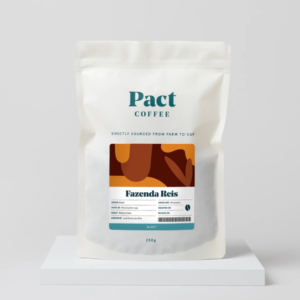
Another coffee from Pact, and again this is one of the coffees on their Select plan, their discovery coffee subscription, but you can also just order it from their website.
Again we’re just taking small steps away from the more classic flavour notes that you might be more familiar with, we’re not diving headlong into the world of lighter roast fruity, funky & challenging coffees.
Fazenda Reis won a 2 star 2023 Great Taste Award, being haled by the judges as a fabulous example of a well made Brazilian coffee.
Pact note that this coffee is reminiscent of peanut butter cups, I’m sure they want to say Reese’s, but they probably can’t for legal reasons ;-), anyway, if you like Reese’s peanut cups, you might want to give this one a try, remembering that these are flavour notes, not flavourings, so there will be no peanuts in this coffee – that would be weird!
Clumsy Goat – Ethiopian Sidamo
As you start to get a bit more adventurous with your coffee beans, there are certain specific origins I’d say you just have to try, to be honest I’d say all of them ;-), but I definitely think everyone needs to experience Ethiopian coffees, in particular Sidamo, and Yirgacheffe (a subregion of Sidamo).
This is an area that produces very characterful coffees, known for their bright, crisp acidity, and Clumsy Goat have noted that their Sidamo has notes of stone fruit, citrus and delicate lemon grass.
So this is a light and fruity coffee, medium roast, it’s a coffee that I would expect someone to find challenging if they move onto to this as one of their first coffees after making the switch to freshly roasted coffee beans, but a coffee that someone who has developed their coffee palate to a certain degree would find interesting and enjoyable.
Personally, I find the more interesting funky, fruity and bright coffees like this to be very interesting to try, especially if I’m in the mood for cracking out one of the pourover filters, or using the Sage Precision Brewer (gold setting, nice and simple!). But I wouldn’t see coffees like this as my every day driver, they’re coffees I’ll try when I’m in the mood for trying something different.
Some people only, or mainly drink the most interesting coffees they can wrap their gums around, and that’s fine – if this is you, you’ll find no end of interesting coffees like this from the hundreds of small batch coffee roasters we’re lucky to have in the UK.
If this isn’t you, and like me you prefer to have a main “house” coffee that you know very well and that you drink most mornings, that’s great too, but I’d still recommend trying interesting coffees as you go along, to broaden your coffee horizons and help to further develop your palate, and your home barista skills.
Barista & Co – Sunny Days
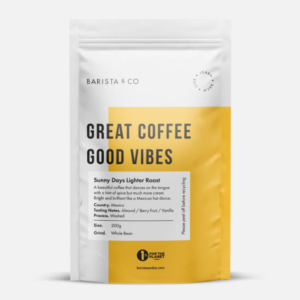
We’re getting a bit lighter with the roast now, and this one from Barista and Co in Dorset is one they’ve recommended mainly for filter. You certainly can use light roasts for espresso, and many people do, but it’s definitely more of a challenge on the setup and on the skills of the home barista.
I can certainly understand why Barista & Co would state that this is recommended for filter coffee, we do the same at cworks when it comes to coffees that we know that the majority of newer home baristas will struggle with both when it comes to dialling in and to the taste profile, and we know that most people who’re looking for lighter roasts for espresso will know that they often need to look for beans that are labelled as being aimed at filter brewing.
So the flavour notes Barista & Co are labelling their Sunny Days beans as having, are mixed berries, Almonds & Vanilla, an interesting combo, and for me this would be one I’d be more likely brew via pourover or my Sage Precision Brewer, unless I’m feeling like experimenting with light roast espresso with my Sage Dual Boiler with the Slayer Mod.
I have a couple of Dual Boilers, both very well used machines that had seen much better days (hence I got them for a bargain on eBay!) when my engineer friend reconditioned them for me. He did the almost free and completely reversible slayer mod on one of them, so I can use the hot water dial for flow control, and I use the other one as my daily home machine.
Cworks – Cranberry and Pomegranate Kenya
This is another coffee that someone just dipping their toes into freshly roasted coffee beans might find slightly shocking, but someone who is a bit more familiar with speciality coffee is likely to find very enjoyable, if they know what to expect.
This is a washed processed Kenyan coffee, it’s a light roast, bursting with tangy & fruity notes and full of the kind of complexity you’d expect from a quality Kenyan coffee from this area, Kirinyaga County, close to Mount Kenya.
For me this is one of those coffees that I think people will find enjoyable even if it’s not quite their bag. I’ve heard from customers who mainly drink dark roasts, who really enjoyed this coffee for the fruity but not overly acidic notes, and for level of complexity. I’d challenge you to take sip after sip of this coffee and not to notice lots of different flavours in each mouthful.
Again, for me this isn’t what I’d drink as my house coffee, I mainly drink espresso – and this is very interesting and different for espresso, so it’s one I’d definitely reach for when I’m in the mood for that, or for when I really fancy a fruity & interesting filter coffee.
Kev's Flat White FAQ
What is the best species of coffee beans?
OK so this is a bit of a tricky one – there are coffee species – just a few – and then coffee subspecies, known as “varietals” – and there’s an S load of them, which in case you weren’t aware, is slightly less than an F load, and nowhere near as much as an F tonne.
Actually, when I say there are a few coffee species, there are loads – over 120 in fact, but there are only really two that are commercially available, and they are Arabica and Robusta.
There are Liberica beans too which are commercially available but only if you put a lot of effort in and buy them from source – so I’ll just talk about Arabica and Robusta here.
Arabica Coffee Beans
Around 60% of coffee consumed is Arabica. The full name of this species is Coffea Arabica, it’s thought to have originated in Ethiopia, and it’s a word synonymous with quality when it comes to coffee – although not all Arabica is high quality, a big percentage of commodity coffee is Arabica.
Arabica offers more complexity than robusta. It contains less chlorogenic acid, so there isn’t the same level as astringency which can overshadow any other taste notes with Robusta. Also as there are so many subspecies of Arabica, there’s a lot more variety available.
The main subspecies or varietals of Arabica are known as:
- Bourbon. A natural mutation of Typica from the island that was named Bourbon at the time (now called Réunion). Known for sweetness and tones of chocolate and fruit.
- Catuai. A deliberately made hybrid of Caturra and Mundo Novo, also known for sweetness and for a range of taste notes including chocolate, caramel, honey & spices.
- Caturra. A natural mutation of Bourbon, known for its bright acidy.
- Geisha. Believed to originate in Ethiopia, a varietal known for its floral and fruity notes.
- Heirloom. A general term used for a number of different Ethiopian varietals, most of which are probably the result of natural cross-breeding.
- Kent. Thought to be a mutation of Typica, developed for its resistance to leaf rust. This isn’t grown in Kent! It’s often Monsoon Malabar processed which is a very interesting processing method which leads to unusual musty or earthy flavour notes.
- Maragogype. A mutation of Typica, known for huge coffee beans & a mellow, smooth cup.
- Mundo Novo. A natural hybrid of Typica and Bourbon, named after the municipality in Brazil where it was discovered, known low acidty, medium to high sweetness and a thick body.
- Pacamara. A hybrid of Pacas and Maragogype created in 1958, known for complex fruity taste notes & vibrant acidity.
- Pacas. A natural mutation of Bourbon known for being easier to pick but tasting similar to Bourbon.
- SL-28. Another Bourbon mutation, known for its fruity, often blackcurrant, flavour notes.
- SL-34. As with SL-28, a mutation of Bourbon, known also for fruity cups.
- S795. Also known as ‘Jember,’ a cross of S288 (a naturally occurring Arabica-Liberica hybrid) and Kent, as part of the “Selection Line” program to develop leaf rust-resistant coffees. Known for dark chocolate taste notes, along with caramel, maple syrup and brown sugar.
- Typica. If I wasn’t doing this alphabetically, this would come first, as Typica is believed to be the parent plant of all other Arabica varietals, the original Arabica. Typica is known for very high potential cup quality but is very susceptible to leaf rust, which is one of the reasons so much effort has gone into trying to create resistant strains.
- Villa Sarchi. A natural mutation of Bourbon known for high yields and capable of very high cup quality. Known for clean fruity acidity and high sweetness.
What increases the variety, even more, when it comes to Arabica coffee beans, is that they’re regularly blended to create even more interesting tasting coffees. Most speciality coffee beans tend to be a blend of two or more varietals, and espresso blends can include Robusta.
Robusta Coffee Beans
Robusta is more of a nickname given to this species, due to how robust this coffee plant is. The species is called Coffea canephora, and it’s a great coffee when it comes to where you can grow it, how hardy & resistant to disease the plant is – and it’s cheaper to produce.
The only problem is, Robusta isn’t everyone’s cup of tea, I mean coffee. Although it can work brilliantly as part of an espresso blend (hugely popular in Italy) on its own Robusta is known for its astringency and harshness, as well as its high caffeine content – as much as double that of Arabica.
But to be fair to Robusta I think it’s probably fair to say that it owes much of its reputation as a poor quality coffee (when consumed on its own and not as part of a blend), to the way it’s traditionally grown, processed and roasted.
Robusta has mainly been grown and processed as a commodity, where taste has nothing to do with price. It’s mainly been commercially roasted in big batches, and it’s mainly been consumed as instant coffee – so it’s really no wonder it doesn’t have a great reputation.
I’m sure that if it’s grown, processed and roasted with the same kind of expertise as speciality Arabica beans, Robusta would have a much different reputation. Not that it would still be everyone’s favourite, but I’m really excited to see what’s going to happen with the speciality Robusta market which is developing at the moment, particularly in Brazil.
What is the best form to buy coffee beans?
This is a very good question, and there’s one very simple answer: whole beans.
You can buy most coffee beans either pre-ground or whole bean, and of course, it’s easier to buy pre-ground, but what you have to remember is this:
As soon as coffee beans are roasted, their goodness is no longer locked in. There’s a degassing period which beans are arguably (this is a bone of contention) better enjoyed after, but after this period coffee beans are just getting staler by the day.
With whole beans, this deterioration is slower, as not as much surface area of the coffee bean is exposed. With preground, so much more surface area of the coffee bean is exposed to the air, that the coffee goes stale a heck of a lot quicker.
If you filter brew your coffee or are brewing via Aeropress or other manual brew methods including cafetiere, then if you must buy pre-ground, I’d recommend that you buy it from someone who grinds it on the day of dispatch.
For example, if you order pre-ground coffee from The Coffeeworks, we grind it for you on the day of dispatch, so it’s as fresh as it possibly can be when you get it.
Still, I highly recommend that you buy whole bean coffee and grind it yourself. In my humble opinion, nothing beats the taste and the aroma of freshly ground, freshly roasted, freshly brewed coffee.
By the way, I would never recommend pre-ground for espresso. To get the perfect extraction for espresso you need to get the grind perfect, depending on your machine and depending on the beans, it’s very unlikely you’re going to get pre-ground beans that just happen to be at the right grind size for your espresso machine – usually pre-ground coffee is too coarse for espresso, leading to under extracted and therefore poor tasting espresso.
Freshly Roasted Coffee Vs Mainstream Coffee Beans – What is The Difference?
The main difference between what I usually refer to as “mainstream” or “supermarket” coffee beans, and freshly roasted coffee beans, is that mainstream beans lack a roasted on date and are usually roasted darker.
There are exceptions to the above, but most mainstream coffee beans you’d pick up at the supermarket don’t have a roasted on date, so you don’t know how old they are, and they’re mainly darker roast profiles, meaning that “medium” or “dark” from the supermarket or big online retailer is usually quite a bit darker than what small batch roasters would call medium or dark roast.
Some (not all) mainstream big brand and generic brand coffee is also commodity coffee.
What is Commodity Coffee?
Commodity coffee beans are priced by the stock market, and traded purely as a commodity like wheat or oil, meaning that quality doesn’t impact the price. The market sets the price, and a bag of coffee beans is simply a bag of coffee beans – quality doesn’t come into it.
Producers who are growing coffee to be traded on the commodities market (and some producers do produce some beans for the speciality coffee market and some for the commodities market) have to keep the price as low as possible, and since taste doesn’t impact the price on the commodities market, coffee for this market is produced as cheaply as possible, simply by necessity.
What is Speciality Coffee?
The speciality coffee industry was kicked off by the legendary Erna Knutsen in the 1970s, who started working in the coffee industry for one of the big coffee traders, and noticed that there were some really interesting coffees coming from smaller producers that didn’t produce enough to fill a container. They were labelled as broken lots, and the big traders weren’t interested in them.
Erna was interested, though, she called them her Gems. She also had relationships with lots of small batch roasters, most of whom sold door to door back then, and who the big traders also weren’t interested in dealing with. Erna put the two together, and created speciality coffee.
It’s since developed to the point that it has to be protected from just being a buzz word that clever marketers would exploit, and this is done by the Speciality Coffee Association. Certified Q graders grade coffees and determine whether it’s worthy of being classed as speciality coffee.
So in order to be classed as speciality coffee, coffee beans have to score at least 80 points out of 100 by the SCA. I could have just given this as a one line answer ;-), but this isn’t really what speciality coffee is, it’s so much more than that, so to just say “speciality coffee is coffee that has been awarded at least 80 points by the speciality coffee association” isn’t a full explanation of what speciality coffee is, although it’s technically accurate.
For more on this, and the amazing Erna Knutsen, see:
Life is like a box of chocolates, subscribe to my YouTube Channel, try my coffee at The Coffeeworks (use discount code CWNC25 for 25% off your first order), follow me on Twitter & Instagram, follow the coffeeblog FaceBook page, and that’s all I have to say about that.
Coffee Blog is proudly powered by WordPress